Scriptly Helps Pharmacies Identify Trends in Real Time with Reveal

Explore the complete guide to embedded analytics, including architecture, security, AI capabilities, implementation patterns, and evaluation criteria for modern applications.
Read Now
Fully branded white label dashboards offer custom personalization so that your customers can present a holistic service that is all branded to one company.
Read Now What is the better solution for your embedded analytics? Learn what are the trade-offs behind the embedded analytics build vs buy decision.
Executive Summary:
Key Takeaways:
SaaS leaders face constant pressure to ship new features, keep customers engaged, and control costs. Analytics often becomes the bottleneck. When dashboards aren’t integrated into the product, adoption drops, and the roadmap slows. When analytics is built in-house, development time expands, maintenance drains resources, and other priorities get pushed aside. Both choices carry risks that directly affect growth.
The dilemma is clear. Building promises control, but it comes with high development and maintenance costs. Buying speeds up delivery but raises concerns about vendor lock-in and customization. Each option affects your time to market, total cost of ownership (TCO), and long-term ROI.
Still, with 81% of analytics users already relying on embedded analytics, it’s clear that analytics are no longer an add-on. They have already become a product-defining feature.
For SaaS leaders, this means the ‘build vs. buy’ analytics decision extends beyond budgets and timelines. It determines how your product delivers value, how your customers engage, and how competitive your business will be in the long run.
The embedded analytics build vs buy decision is not only about cost. It defines how fast you deliver insights, how well customers adopt them, and how scalable your product becomes. Each path carries clear trade-offs that SaaS leaders must weigh carefully.
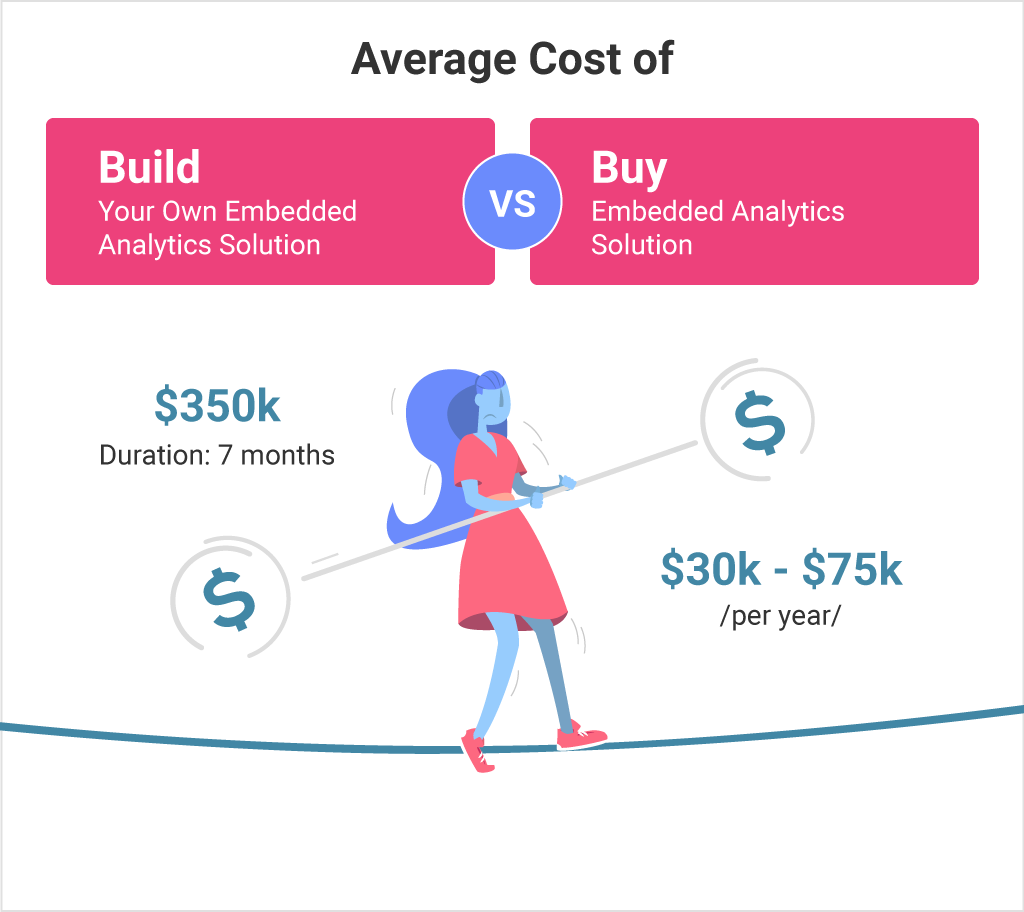
Building analytics in-house gives complete control but comes with high upfront costs. Development can take months and requires specialized skills. After launch, you also carry maintenance, upgrades, and infrastructure bills. These can easily go well above $350k for the development process alone.
Surveys show that 42% of users cite limited technical resources as their biggest challenge with analytics adoption. That reflects the hidden cost of shifting engineers from product features to dashboards.
Vendors use different pricing models, but many charge either per user or by consumption. This creates unpredictable bills as adoption grows. Reveal stands apart with fixed pricing, which avoids cost creep and helps SaaS leaders plan long term.
The expense is not just financial. Every dollar and hour spent on analytics is time lost for roadmap features. That is why the embedded analytics build vs. buy cost must be evaluated in conjunction with speed.
SaaS companies live and die by release cycles. Building analytics internally often takes six to twelve months. During that time, competitors may launch faster and win users with better insights.
The story of Avion, which saves a year of development time with Reveal embedded analytics software, shows the impact clearly. By embedding instead of building, Avion gained twelve months of roadmap focus.
The broader market highlights the same risk. 61% of organizations still juggle four or more BI platforms, losing up to 40% of productivity through context switching. These inefficiencies slow down innovation and stretch development capacity.
Speed to market is not just a convenience; it defines whether analytics becomes a growth driver or a drag on your product roadmap. That pressure only increases as you scale.
What works for a pilot often fails at scale. In-house builds may perform well at launch, but they can strain as data grows and user counts rise. Scaling custom analytics means constant investment in infrastructure and developer support.
True scalability depends on architecture. SaaS leaders require multi-tenant environments, support for diverse data sources, and performance optimization to handle high volumes without delays. Without these, dashboards slow down and adoption drops.
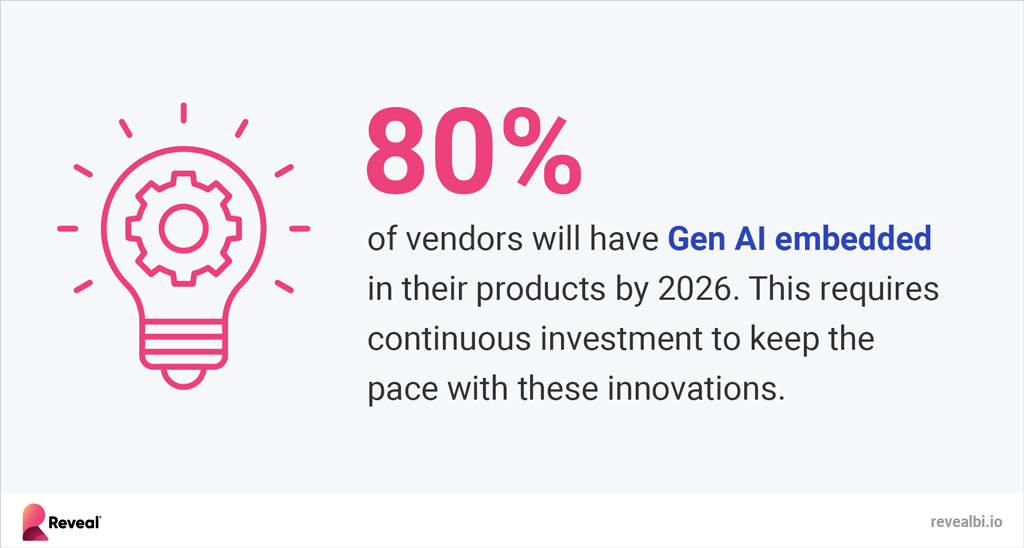
The industry is also moving fast. By 2026, over 80% of vendors will have GenAI embedded in their products. Building to keep pace with these innovations requires continuous reinvestment.
Scalability is not only about infrastructure. It also affects user adoption and long-term competitiveness, which brings us to experience design.
Analytics only adds value if customers use it. External portals and iFrame add-ons often fail because they feel disconnected from the product. Adoption drops when insights sit outside the normal workflow.
Modern SaaS leaders need branded dashboards and full white-label analytics to make analytics feel native. This creates an intuitive user experience that matches the rest of the app.
The data supports this. 39% of organizations report using embedded analytics specifically to improve productivity. When insights are put into context, they become an integral part of daily work rather than an additional step.
A smooth experience builds customer trust and retention. But adoption alone is not enough. Long-term value depends on how flexible and sustainable the solution is over time.
Building is never “done.” Analytics requires updates, bug fixes, and new features to match changing customer needs. Many teams underestimate this maintenance burden, which compounds technical debt and slows product teams.
Research shows that 35% of users cite shifting analytics needs as their biggest adoption challenge. Internal builds struggle to keep pace with evolving demands, leaving customers dissatisfied. Furthermore, resent estimates show that 10-year maintenance costs can exceed $1 million and easily come close to $3 million.
Buying shifts the burden to the vendor. Updates, feature improvements, and compliance changes are delivered as part of the platform. For SaaS leaders, this means stable performance, predictable costs, and clearer ROI over time.
Maintenance shapes long-term outcomes. It determines whether analytics drives retention and growth or becomes a drag on your product roadmap. This positions it at the core of the embedded analytics build vs. buy discussion.
These trade-offs explain why many SaaS leaders turn to buying, since the right embedded solution solves these issues at scale.
Building analytics inside your product gives you control, but it also introduces risks that compound over time. These pitfalls often go unnoticed at the start and only become visible once adoption grows.
Budgets rarely account for the full lifecycle. Beyond initial build costs, you incur ongoing expenses for testing, bug fixes, compliance updates, and infrastructure maintenance. Over time, these expenses often surpass the cost of a proven solution.
When developers spend cycles building and maintaining dashboards, they stop working on product features. What should be a product team becomes a reporting team, slowing roadmap delivery and reducing innovation.
Hosting, scaling, and securing analytics require additional infrastructure and resources. 32% of users cite legacy infrastructure as the primary barrier to adoption. Each new dataset or user cohort adds more pressure to internal systems.
Early shortcuts, patchwork integrations, and quick fixes add up. Technical debt slows every new release and makes scaling harder. Without a purpose-built embedded analytics SDK, teams risk building fragile solutions that require constant rework.
These pitfalls drain resources and weaken focus. Instead of driving product growth, internal analytics efforts can trap teams in cycles of maintenance and upkeep. Avoiding these issues is one reason why many SaaS leaders choose to buy instead of build.
Choosing to buy instead of build is often the smarter side of the embedded analytics build vs. buy decision. The benefits extend beyond faster delivery. They impact scalability, customer adoption, and long-term ROI.
Embedding an existing solution reduces development cycles from months to weeks.
Teams focus on core features instead of reporting tools.
New releases ship faster, giving your product a competitive edge.
Customers get analytics sooner, which improves satisfaction.
Speed is a decisive factor in the embedded analytics build vs buy decision, since every month of delay risks losing ground to competitors.
Buying reduces operational risk by shifting maintenance to the vendor.
Updates, compliance, and bug fixes are handled externally.
Technical debt and unplanned costs are avoided.
Internal teams focus on innovation instead of firefighting.
With predictable improvements, buying lowers the total cost of ownership and delivers stability that internal builds rarely sustain.
Scaling a homegrown solution often raises costs and strains infrastructure. Buying solves this by offering transparent, growth-friendly pricing.
No per-user charges that penalize adoption.
Architecture designed for SaaS scalability from day one.
Performance optimization that keeps dashboards responsive.
This makes buying the practical choice in the analytics platform build vs buy debate, since growth should expand revenue, not expenses.
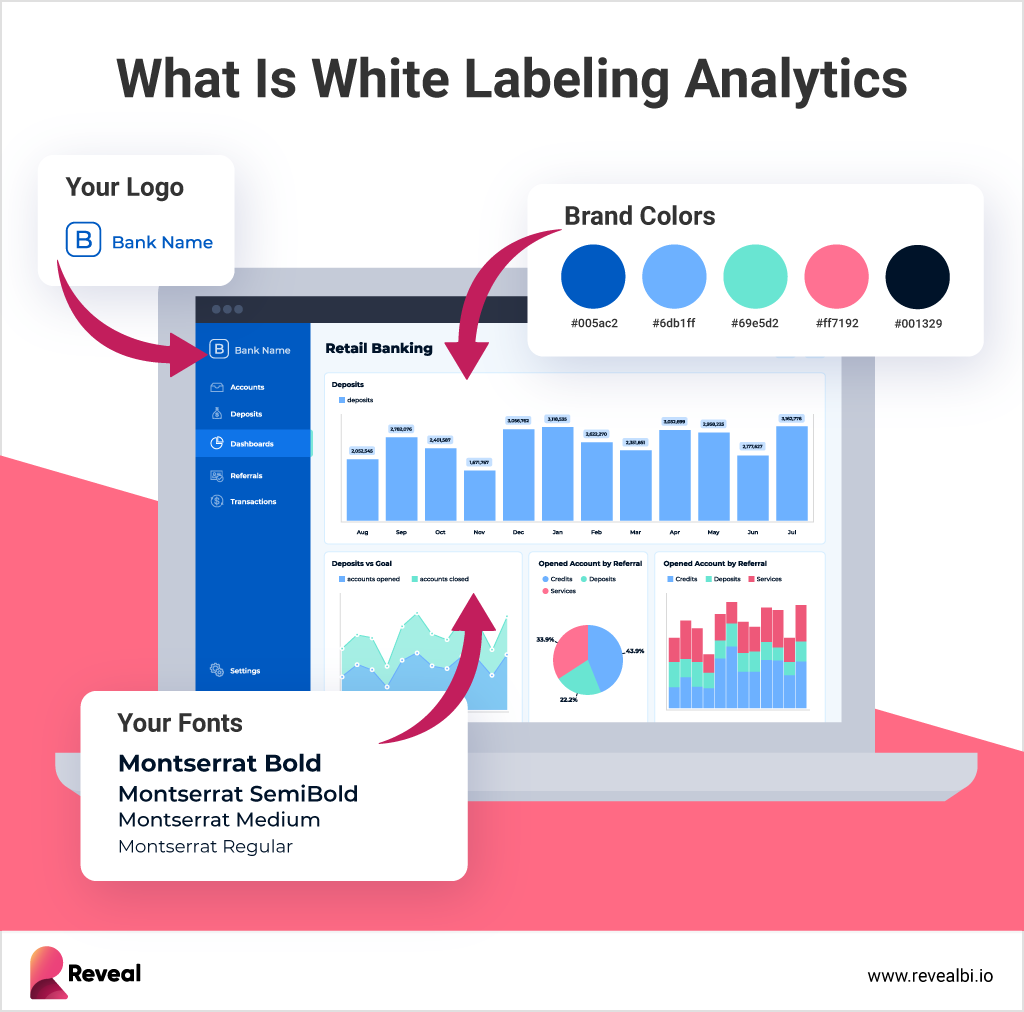
Customers engage more when analytics feels like part of the product. Buying enables SDK-based embedding and full control over design.
Branded dashboards that match your UI.
White-label customization to maintain consistency.
Seamless experience that drives customer adoption.
An embedded solution done right ensures analytics strengthens the overall product, not distracts from it.
Analytics must evolve with market demands. Buying gives you access to advanced features without constant rebuilds.
AI-powered analytics for predictive and conversational insights.
Self-service BI to reduce support load and empower customers.
Regular feature updates that keep your product competitive.
73% of tech leaders plan to expand AI adoption in 2025. Buying ensures you deliver these capabilities without stalling your roadmap.
Buying is not just about convenience. It’s about making the embedded analytics build vs. buy decision in a way that aligns with customer expectations, protects resources, and secures long-term ROI.
Vendor lock-in is the top objection raised in the embedded analytics “build vs. buy” debate. SaaS leaders often worry about being tied to a vendor’s pricing model, roadmap, or technology stack. The fear is that once analytics is embedded, moving away becomes costly and disruptive.
But lock-in is only one side of the equation. The opportunity cost of building is just as real. Developing analytics in-house ties your product to internal resources, creates ongoing maintenance burdens, and locks you into technical debt that can slow innovation for years.
Modern solutions reduce lock-in risks significantly. SDK-based embedding gives you control over design, branding, and integration logic. Predictable pricing avoids per-user cost spikes. Instead of dependency, you gain flexibility and a product-native experience that evolves with your roadmap.
Research shows that79% of corporate strategists view AI and analytics as critical to long-term success. The real risk is falling behind competitors while debating lock-in. In practice, the gains from embedding far outweigh the potential downsides.
In the context of embedded analytics, the “build vs. buy” debate often reveals that lock-in is more perception than reality. The true strategic question is how quickly and effectively you can deliver analytics that customers adopt and value. To answer that, SaaS leaders need a clear decision framework.
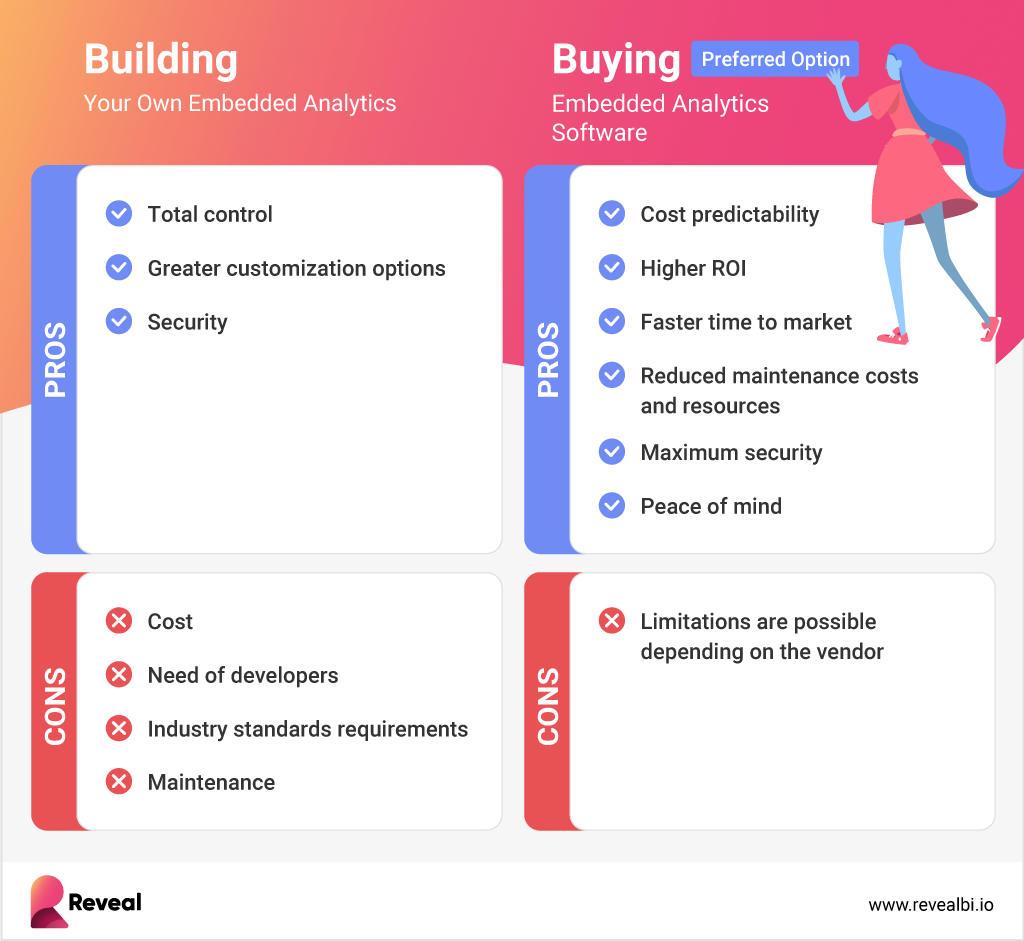
The embedded analytics build vs buy decision is not only about features. It shapes your product roadmap, customer adoption, and long-term ROI. To make the right choice, SaaS leaders should weigh these core factors:
If analytics is central to your value proposition, building may feel attractive. But if customers expect reliable dashboards rather than unique reporting features, embedding is often more efficient.
Internal teams have limited bandwidth. When engineers focus on analytics, they shift attention away from core features. This creates product roadmap delays and opportunity costs.
Customers expect branded dashboards and a seamless experience. Buying gives you white-label analytics-level control and SDK-based embedding to match your app’s design without heavy dev effort.
Building demands ongoing investment in infrastructure, maintenance, and upgrades. Buying delivers predictable costs and shifts long-term risk to the vendor.
The “build vs. buy” analytics choice isn’t just a technical decision; it defines how well you can deliver insights that scale with your product and how sustainable your ROI will be.
Clear decision factors prepare the ground for choosing the right vendor. That makes it easier to see how solutions like Reveal fit into the picture.
The embedded analytics build vs buy debate comes down to focus. SaaS leaders want analytics that scale with their product, strengthen customer adoption, and deliver predictable ROI. That is where Reveal fits in.
Reveal is designed for SaaS and ISVs that require seamless analytics integration into their products. It removes the hidden costs and delays of building while avoiding the limitations of iFrame-based tools.
With Reveal, you get:
True SDK-based embedding: analytics integrates directly into your app, with no iframes.
Full white-label analytics: branded dashboards that match your UI, with customization at every level.
Predictable pricing: no per-user fees or usage spikes, costs remain stable as adoption grows.
SaaS scalability: multi-tenant architecture and performance optimization built for growth.
Future-ready analytics: advanced features like AI insights, self-service dashboards, and ongoing updates without extra development effort.
For product teams weighing the analytics platform build vs buy choice, Reveal provides the control of a custom build with the speed and reliability of a proven platform. It helps SaaS leaders reduce dev effort, improve adoption, and deliver analytics that drive long-term ROI.


 Return to Blog


 ChatGPT
 Perplexity