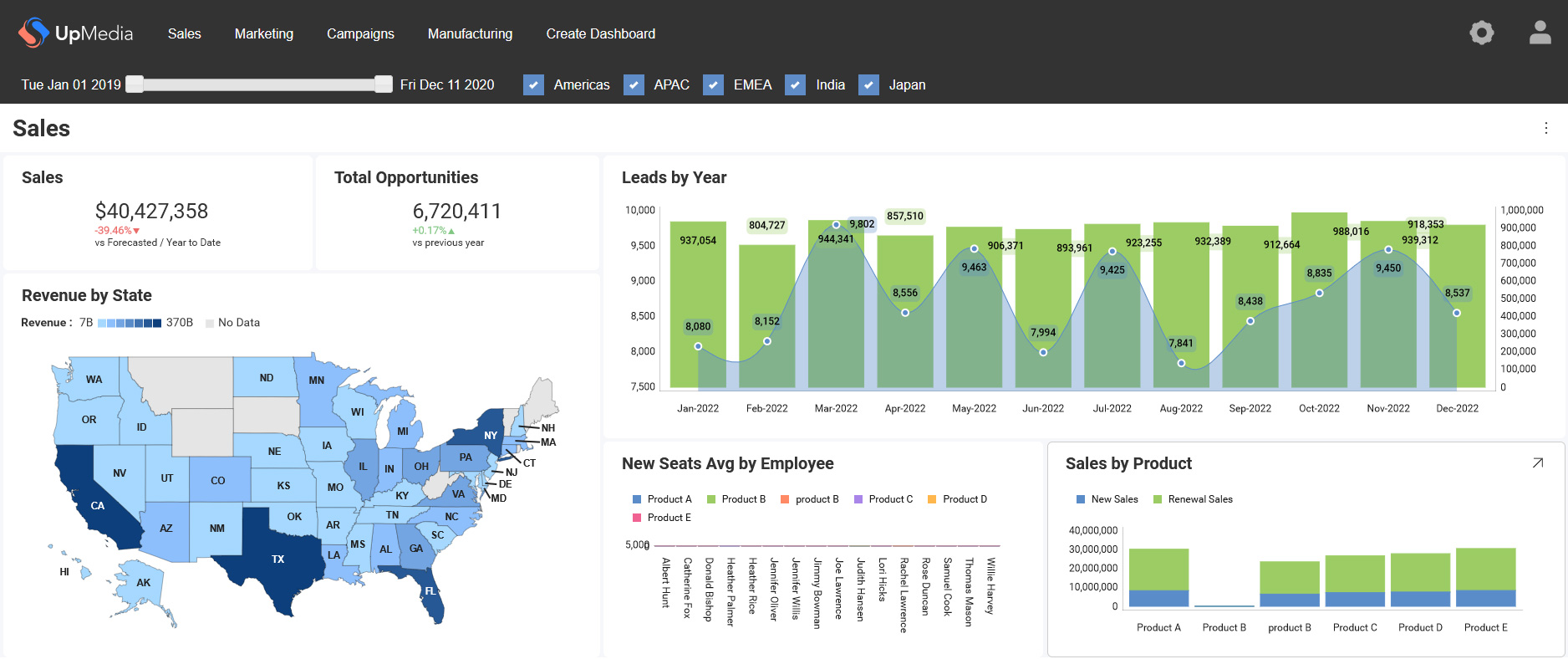



What Is Business Intelligence?
Business intelligence refers to the process of taking data points and converting them into resources that can be used to make intelligent business decisions. Processes that are part of business intelligence can include collecting, storing, and retrieving data; creating reports based on that data; and making decisions backed by data.
What Is the Difference Between Business Intelligence and Business Analytics?
Some companies use terms such as business intelligence and business analytics interchangeably, but technically these are two different things. At the very least, they’re two sides of the same coin.
Business intelligence is the act of gathering, reporting on, and understanding existing data. It’s descriptive in nature, which means it tells you to want has already happened or what is currently happening. Examples of data or reports related to business intelligence include:
- How many customers bought a certain product in a specific time period?
- A list of all the inventory currently on hand
- The average speed of call answers for every day this week
- How many customers are currently on hold waiting to speak to someone?
- A comparison of sales month over month or year over year
- How many units the competition is selling?
At first, business analytics look like the same thing, but where BI seeks to ask and answer questions about what is, why it is, and what that means for the company, business analytics takes what is and forecasts what might be. BI is descriptive, but BA is predictive. Examples of data or reports related to business analytics include:
- How many customers are likely to buy a specific product next month?
- What inventory does the business need to order to keep up with current demands?
- What is a realistic and appropriate goal for the average speed of answer given expected client call loads, customer expectations, and staffing?
- What type of call volumes can be expected for next month?
- Expected sales numbers for next quarter
In many cases, business intelligence is used as a catch all term that includes business analytics. When this is the case, all of the above data and reports may be the purview of the business intelligence team.
Who Needs Business Intelligence?
Smaller companies tend to overlook business intelligence as something only large corporations require. But the truth is that every endeavor that seeks to serve people or make a profit can use business intelligence to make decisions that better support short and long-term goals.
Not everyone needs to do business intelligence the same way, of course. It would be overkill for a small local bakery to invest in robust reporting and analytics software that a corporate manufacturer or bank might use. But that doesn’t mean that the baker shouldn’t base their decisions on real data.
Consider this example. The baker arrives at the shop on a Monday morning. It’s time to prepare ingredients and dough ahead of time for the items that will be baked and sold that day or week. Does the baker randomly guess how many cakes, cupcakes, or other items to make? No, they make products based on how many orders are already in and how many orders might be expected to come in, given past experience.
Whether the data is held in the baker’s mind, written in a notebook, or housed in a computer database, this is still business intelligence in action. The more information the baker has — and the more accurate it is — the better. So digital data, which can exist in large amounts and is easier to work with than hard-copy or “memorized” data, is typically the best practice.