Scriptly Helps Pharmacies Identify Trends in Real Time with Reveal

Explore the complete guide to embedded analytics, including architecture, security, AI capabilities, implementation patterns, and evaluation criteria for modern applications.
Read Now
Fully branded white label dashboards offer custom personalization so that your customers can present a holistic service that is all branded to one company.
Read Now Supply chain performance depends on visibility across suppliers, inventory, logistics, and demand. Embedded analytics puts those insights inside your SCM, WMS, and procurement tools so teams can act without switching systems.

Supply chain analytics helps organizations across all industries make smarter, faster, and most importantly, data-driven decisions about their business operations that can affect quality, delivery, customer experience, and ultimately, profitability. The better a company performs supply chain analytics, the better it will be able to understand its customers and their needs.

Real-time actionable insights about your orders empower you to improve the entire order management cycle and strengthen customer relationships. For example, analytics can help businesses maintain optimal inventory levels and fulfill all customer orders on time to ensure customers stay loyal and don't stray to the competition.
Procurement professionals can gain accurate, timely, and actionable insights into their company's overall procurement spending and streamline their procure-to-pay processes. Moreover, analytics helps increase the efficiency of the procurement functions and free up extra time to focus on strategic activities.
Supply chain analytics help you combine all of your previous orders data with real-time market analysis to create a better and more accurate demand forecast, much more successfully than human supply chain planners can. More accurate demand planning means you can avoid overspending on procurement and keep costs down while still meeting customer's demand.
Analytics solutions allow businesses to identify risks and help predict future risks by spotting trends and patterns throughout the supply chain. Advanced supply chain analytics can also help identify such risks at the onset so your teams can act at the right moment and reduce the risk impact for the business.
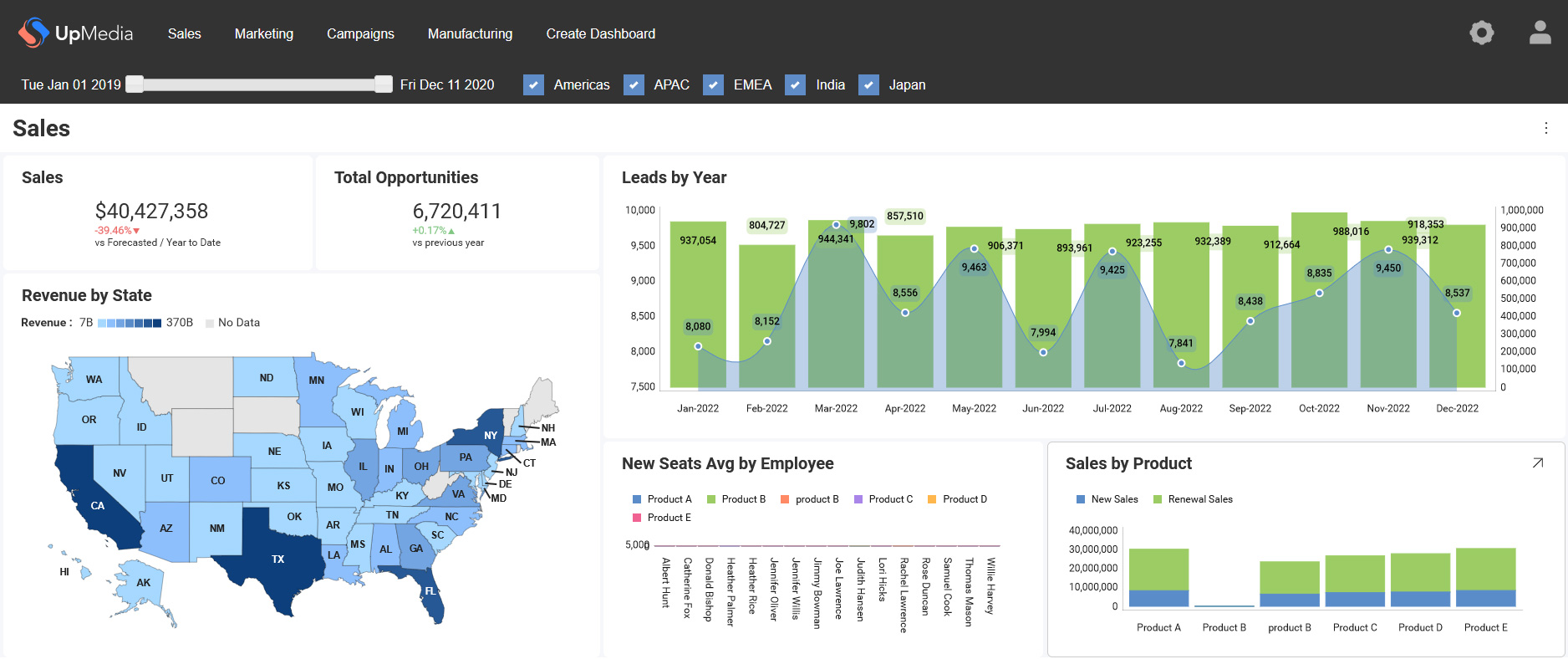
A supply chain dashboard is a reporting tool that helps businesses track inventory levels, warehouse operations, logistics, and supply chain KPIs to help professionals gain deeper understanding of how they perform and in which areas is there room for improvements.
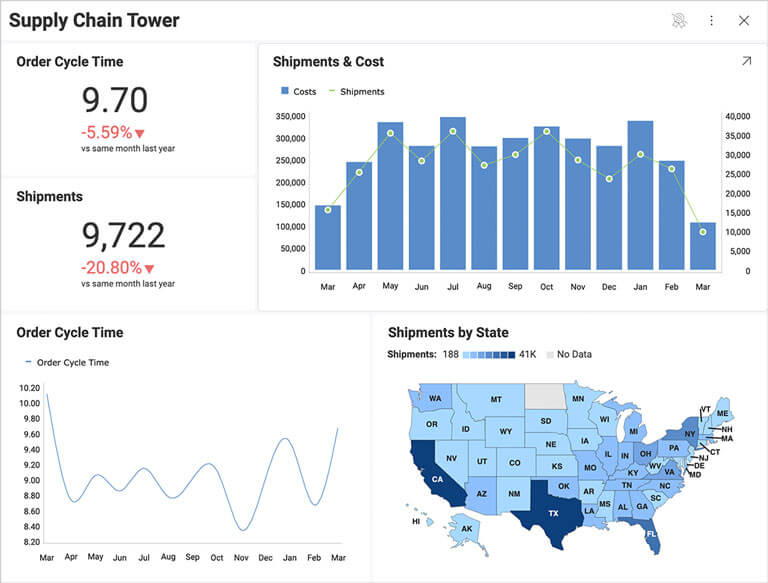
A supply chain control tower is a dashboard containing data and key business metrics of the supply chain. It enables businesses to better understand, prioritize, and resolve critical issues in real-time by monitoring inventory, shipment, costs, and more.
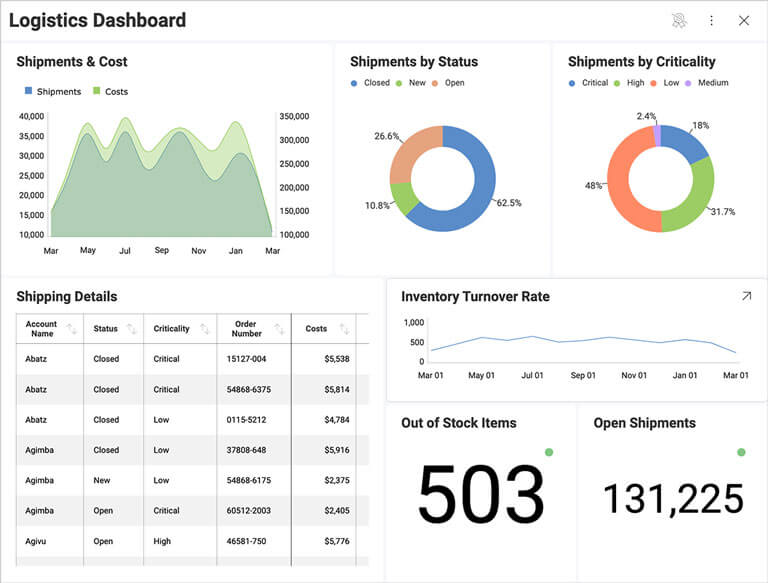
A logistics KPI dashboard allows supply chain professionals to monitor and report on important performance metrics concerning transportation processes, picking and packing of orders, warehouse operations and overall supply chain logistical management.
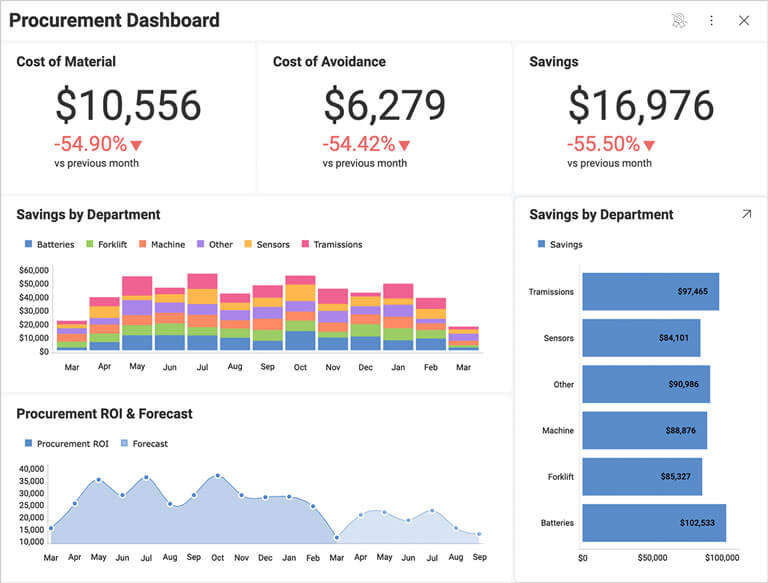
The purchasing manager requires a very focused and comprehensive management of the entire supply chain, from beginning to end. A procurement dashboard enables purchasing managers to efficiently track all processes with the help of procurement KPIs such as purchase order cycle time, compliance rates, and others.
A distribution performance dashboard helps you identify which distributors are delivering orders on time, keep track of the numbers of shipments, and managing distributor routes. By having a clear view of distribution performance, managers can make more intelligent decisions to improve productivity and profitability.
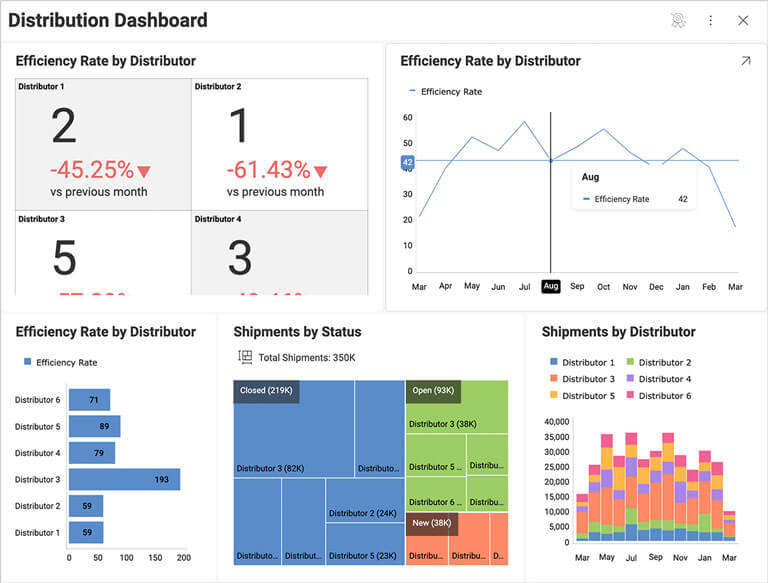
Embedded supply chain analytics integrates inventory, logistics, and supplier performance dashboards directly into supply chain management software so teams can act on data without switching to separate BI tools.
Reveal connects to databases and REST APIs. Most ERP and WMS platforms expose supply chain data via SQL or API that Reveal can connect to directly.
Planners get demand forecast accuracy, inventory position, and supplier performance data embedded directly in their planning tools — eliminating manual reporting and enabling faster response to supply disruptions.
Yes. Reveal connects to live data sources including databases and REST APIs that receive real-time logistics and inventory data.