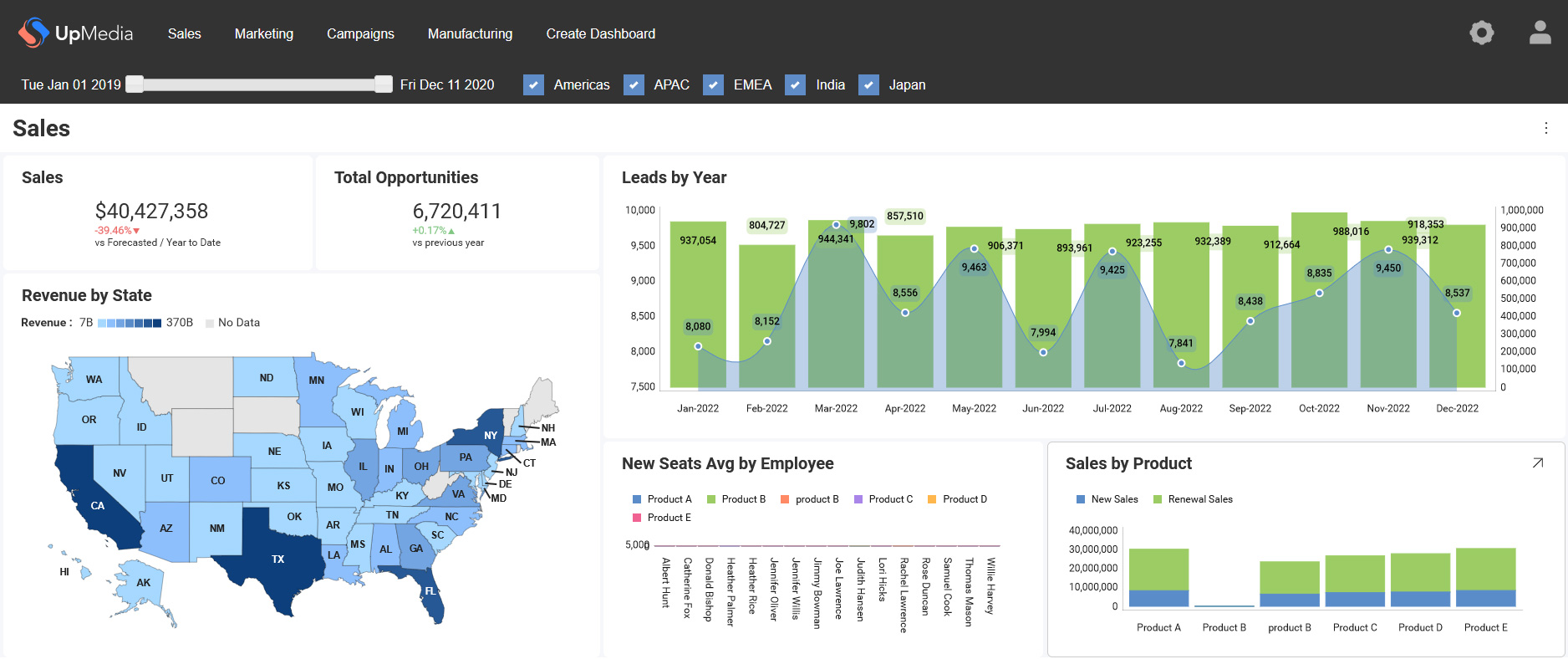
Scriptly Helps Pharmacies Identify Trends in Real Time with Reveal

Explore the complete guide to embedded analytics, including architecture, security, AI capabilities, implementation patterns, and evaluation criteria for modern applications.
Read Now
Fully branded white label dashboards offer custom personalization so that your customers can present a holistic service that is all branded to one company.
Read Now Enterprise-grade security for embedded analytics and AI-powered insights
Reveal delivers embedded analytics designed for security-first SaaS and regulated environments without exposing data to third-party SaaS platforms, fragile iFrame architectures, or uncontrolled AI models.

Embedding analytics is not just a UI decision. It is a security and architectural one.
When analytics become customer-facing, it expands your application's attack surface. Data access, identity propagation, tenant isolation, and AI governance all become critical design considerations.

Reveal enforces tenant isolation at query execution, preventing cross-tenant data access in shared environments.

Reveal restricts AI access to governed data only, reducing the risk of prompt injection and unauthorized data exposure.

Reveal supports GDPR, HIPAA, and SOC 2 requirements through controlled data access, auditing, and flexible deployment models.
For B2B SaaS and regulated industries, security failures do not just impact compliance; they erode customer trust, increase churn risk, and slow enterprise adoption.
 Cross-tenant data access due to weak isolation
  Tenant context enforced at query execution for every request Inconsistent authentication across analytics and application Inherits your existing auth model with no parallel user systems Analytics running outside your security perimeter via iFrames Runs inside your application via SDK, not external containers AI accessing unrestricted or sensitive data AI operates within your permission model and access controls Analytics tools that fail compliance requirements Supports GDPR, HIPAA, and SOC 2 through architecture
 CORE ARCHITECTURE
Reveal embeds directly into your application using SDKs, not external SaaS containers or iFrames, giving security teams full operational visibility.

Built to operate within your application's security model and infrastructure.

Reveal is designed to operate cleanly within enterprise environments:
Reveal enforces your existing security model; it does not replace it.

Reveal doesn't introduce a separate authentication or authorization layer. Your existing identity system remains the source of truth, preventing permission drift and keeping access control consistent across your application and analytics.

Security teams do not lose insight when analytics are embedded.

CORE ARCHITECTURE
AI in analytics must be governed, not experimental.

Fully Opt-In
AI features are disabled by default and must be explicitly enabled. You control scope, permissions, and usage at every level.

Configurable Per Tenant
Configure AI per tenant using your own LLM endpoints, including private or on-prem models, aligned with your security requirements.

Controlled Data Access
AI operates within your permission model and governed data access using metadata, aggregated results, or scoped datasets without bypassing controls.

No Third-Party Exposure
No customer data is sent to third-party AI services unless explicitly configured. No raw customer data is sent by default.
No raw customer data is sent to third-party AI services by default.
Security-sensitive teams do not need to compromise modern analytics experiences to maintain control.
Reveal supports compliance by architecture:
Analytics remains secure from dashboard to export.

Learn why intuitive, self-service, embedded analytics matter
View All Blogs
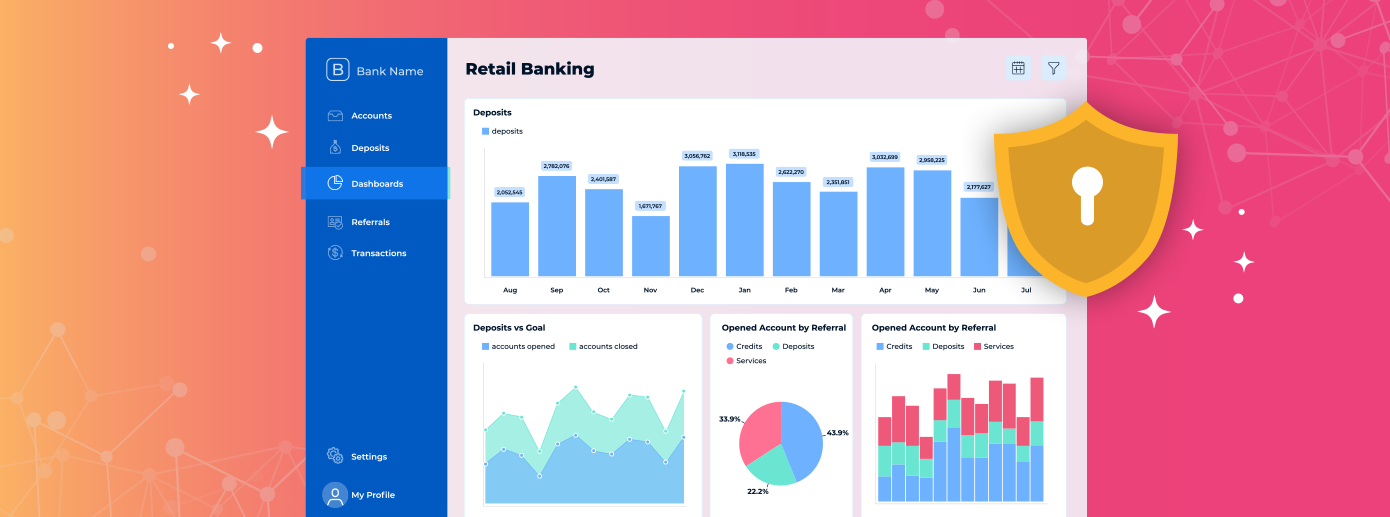

Reveal embeds analytics via SDKs inside your application architecture, not through external SaaS containers or iFrames. Analytics executes within your security perimeter, inheriting your authentication, authorization, and tenant isolation model.
By contrast, many SaaS-based embedded analytics tools operate outside the host application, introducing third-party data exposure, opaque execution paths, and limited auditability. Reveal avoids that model entirely, making secure embedded analytics a foundational design choice rather than an afterthought.
Reveal runs inside your infrastructure, cloud, hybrid, or fully self-hosted, without taking ownership of customer data. All queries execute against your existing data sources, using the same security context enforced by your application.
Reveal does not replicate, monetize, or retain customer data outside your environment. This architecture ensures embedded analytics security without expanding your data exposure surface.
No.
Reveal does not persist customer data in external systems or route analytics through third-party services. Execution, caching, and exports occur within controlled environments defined by your deployment model.
This approach eliminates the common risks associated with SaaS analytics platforms and aligns with embedded analytics security best practices for regulated and enterprise environments.
Yes.
AI capabilities can be enabled or disabled at the tenant, environment, or deployment stage level. This allows organizations to adopt AI analytics selectively while maintaining governance, compliance, and risk control.
Yes.
Reveal supports fully self-hosted deployments, allowing organizations to run analytics entirely within their security perimeter. This includes environments with strict regulatory or sovereignty requirements and aligns with on-prem analytics security expectations.
Reveal enforces tenant isolation at runtime for every analytics request. Tenant context is explicitly propagated and validated before query execution, preventing cross-tenant data access by design.
There is no shared execution layer or global query context. This makes Reveal suitable for customer-facing, multi-tenant embedded analytics in B2B SaaS applications with strict security requirements.
Reveal inherits your application's authentication model and does not introduce a parallel identity system. Users access analytics through the same identity, roles, and permissions already defined in your product.
SSO, OAuth, and SAML integrations are supported, with secure user context propagation across dashboards and interactions. This eliminates policy drift and reduces the attack surface.
AI features in Reveal are opt-in and governed by the same permission model as analytics data. AI-powered analytics operates within defined access controls and never bypasses your security rules.
Reveal supports customer-controlled AI models, including private and on-prem deployments. By default, no raw customer data is sent to third-party AI services, directly addressing embedded analytics AI security concerns.
Reveal supports compliance through architecture rather than bolt-on controls. Data access, residency, and minimization are enforced within your environment, with a clear separation between analytics tooling and data ownership.
Auditing, monitoring, and deterministic exports are designed to support regulatory reviews and enterprise procurement processes.
No.
Security enforcement is part of Reveal's execution model, not layered on top of it. Authentication, authorization, and tenant isolation are handled deterministically, allowing analytics to remain responsive and predictable under load.
Reveal integrates with existing logging and monitoring tools, allowing security teams to observe analytics execution without exposing sensitive customer data.
This enables troubleshooting, audit readiness, and operational visibility without introducing blind spots or unmanaged systems.