Scriptly Helps Pharmacies Identify Trends in Real Time with Reveal

Explore the complete guide to embedded analytics, including architecture, security, AI capabilities, implementation patterns, and evaluation criteria for modern applications.
Read Now
Fully branded white label dashboards offer custom personalization so that your customers can present a holistic service that is all branded to one company.
Read Now Reveal gives ISVs and SaaS companies a true SDK to embed governed, AI-native analytics directly into their product, without building and maintaining a full analytics stack. White-labeled. Multi-tenant. Up and running in days.
Book a Personalized Demo Watch Demo
No iFrames. No separate BI tool. No AI governance surprises.


The ISV market has moved. Buyers evaluating SaaS platforms in 2026 expect data-driven experiences as a baseline, not a premium add-on. They want to ask questions about their data without leaving your product. They want AI-powered insights that explain what happened and what to do next. The ISVs already shipping this are winning deals. The ones still planning it are losing them.
Building analytics in-house looks reasonable until it doesn't. A team that estimates six weeks typically ships something basic in six months, before multi-tenancy, before role-level data governance, before performance at scale, and long before AI. The engineering cost is real. The opportunity cost is higher. Every sprint spent on analytics infrastructure is a sprint not spent on the core product your customers actually pay for.
Embedding a standalone BI tool via iFrame is faster, but it breaks the product experience your users expect. They see a third-party interface inside your product. Customization hits a ceiling quickly. And when your customers' customers need AI-powered answers, an iFrame-based tool can't deliver the integrated, governed experience a modern SaaS product requires.

From customer-facing dashboards to operational reporting, embedded analytics that behave as if they were built by your team.

Give your customers real-time visibility into their own data, fully white-labeled, inside your product, with the permissions and filters your multi-tenant architecture already enforces. They see their data. Only their data. Always.

Understand how customers use your product by embedding engagement and adoption dashboards directly into your admin or customer success workflows. Surface the signals that predict churn before retention becomes a conversation.

Replace the exported spreadsheet and the manual report request. Embed operational dashboards that let your customers monitor performance, track KPIs, and share insights inside the workflow where the data is already being generated.

Deliver revenue, billing, and performance analytics that your customers can explore without leaving your platform. Configurable, role-scoped, and powered by live queries against your existing data infrastructure.
Reveal AI lets your customers ask questions in natural language and get answers directly inside your product — no dashboard navigation, no data exports, no separate AI tool. A user asks, "Which accounts had the highest churn risk last quarter?" They get an answer, an explanation, and the underlying data in seconds, scoped to their tenant and governed by the same role-based permissions your platform already enforces.
For product leaders, this means shipping an AI-powered analytics experience without building a separate AI layer. For engineering leaders, it means token costs that are predictable and controlled, not subject to open-ended LLM usage that arrives as an unexpected invoice. Reveal AI runs inside your architecture. Your infrastructure. Your governance.

Scriptly, a SaaS platform serving independent pharmacies, needed to give its customers real-time visibility into prescription trends, inventory performance, and patient data without building a full analytics infrastructure or hiring a dedicated data engineering team. Their customers expected insights inside the Scriptly platform. Building that capability from scratch would have taken the team months and diverted engineering resources from the core product.
Scriptly embedded Reveal's SDK directly into their platform using their existing tech stack. Within a week, they had fully white-labeled, production-ready embedded dashboards, scoped to each pharmacy's data and integrated with Scriptly's existing authentication model. No separate BI tool. No iFrame. Analytics that looked and behaved like a native part of the product.
Pharmacies using Scriptly now have real-time access to data that previously required manual exports and spreadsheet analysis. Customer satisfaction improved. The feature became a measurable differentiator in sales conversations. And Scriptly's engineering team shipped it in a week rather than a quarter.
Read Customer Story →
“With Reveal, pharmacies now have access to real-time data that drives better decisions. We were up and running in just a week with self-service analytics.”

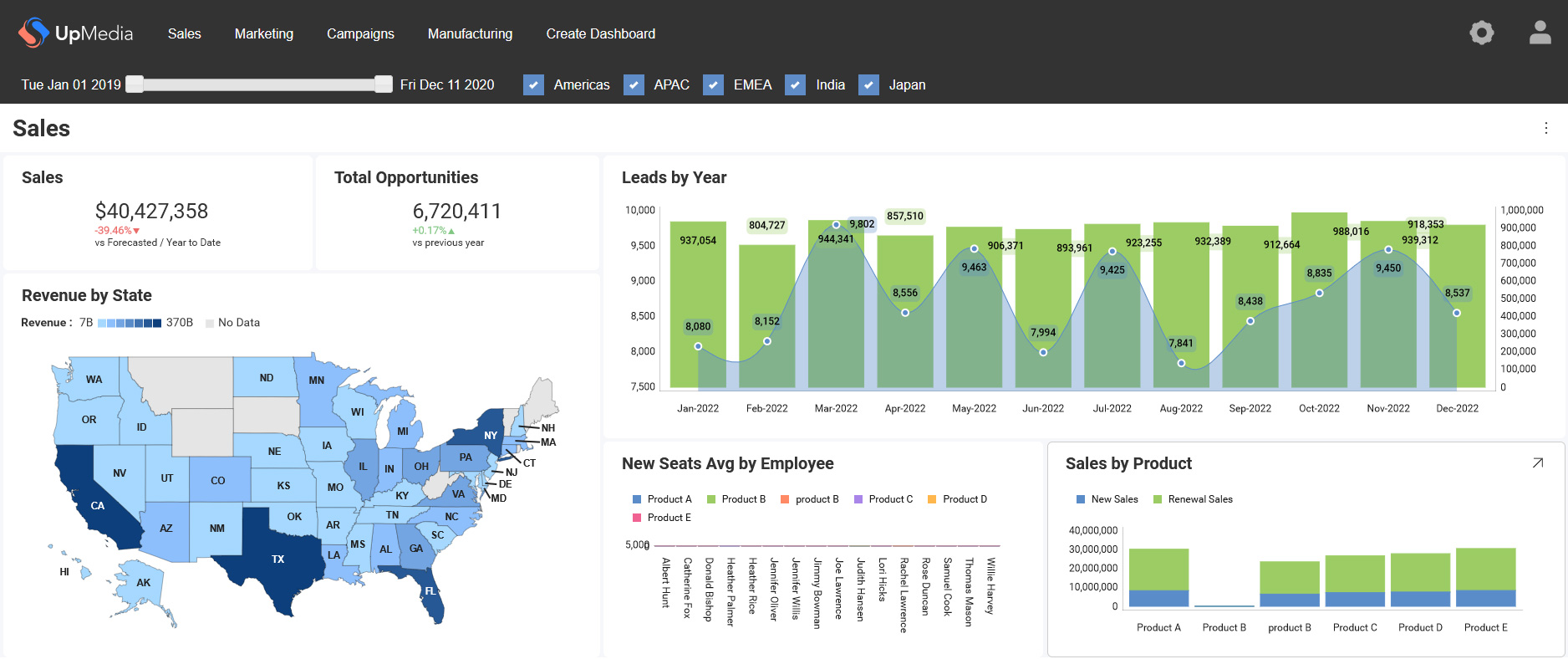
Real dashboards your customers interact with — embedded directly inside your product, white-labeled, and governed by your data model.











Reveal has been a game changer for our ISV platform. We were able to embed production-ready dashboards in days, not months.
The multi-tenant support is exactly what we needed. Our customers only see their data, and it just works out of the box.
The SDK gave us full control over the look and feel. Our customers had no idea it wasn't built in-house.
We evaluated three embedded analytics vendors. Reveal was the only one that didn't require us to rearchitect our data layer or compromise on white-labeling.
AI-powered natural language queries embedded directly in our product. Our customers love it and we didn't have to build any of it ourselves.
The fixed pricing model made our finance team happy and our product team free to scale without worrying about per-user costs eating into margins.
Four reasons ISVs choose Reveal over building in-house or embedding a traditional BI tool.

Reveal's SDK integrates with your existing tech stack, including React, Angular, .NET, and more. Your first embedded dashboard can be in production in a day. Your full implementation typically takes one to two weeks, not six months.

Reveal AI gives your customers conversational analytics: ask a question, get an answer, and see the data fully embedded in your SDK, governed by your existing authentication and permission model. No separate AI layer to build or maintain.

Every tenant's data is isolated at the query level, not filtered in the UI after the fact. Your customers see only their data, enforced before any query returns, regardless of how many tenants share the same platform.

Reveal's fixed pricing means your analytics costs don't grow as your user base grows. No per-seat fees. No capacity-based pricing that turns analytics from a product asset into a cost center. One predictable number, regardless of scale.
See pricing → ISV embedded analytics refers to analytics capabilities built directly into an Independent Software Vendor's product, not delivered through a separate BI tool that users must log into separately.
True embedded analytics is integrated at the SDK level, inherits the ISV's authentication and data model, is white-labeled to match the product's brand, and enforces multi-tenant data isolation automatically.
The distinction matters because users experience analytics as a native part of the product, not as an add-on.
Traditional BI tools are designed for internal data teams, not for embedding inside customer-facing products. They require users to leave the application, authenticate separately, and interact with an interface that reflects the BI vendor's design rather than your product's.
Reveal is designed from the ground up for embedding. The SDK gives you full control over the UI, the interaction model, and the data access layer. See embedded analytics →
Reveal AI is embedded through the same SDK as the rest of the analytics layer, not as a separate tool. Users interact with it inside your product interface.
It translates natural language questions into queries against your data infrastructure and returns answers scoped to the user's role and tenant. The AI layer uses your existing authentication model and data governance rules.
No separate AI governance configuration required. See Reveal AI →
Reveal AI operates within the governance boundaries your platform already enforces. Queries are scoped to the user's tenant and role before any data is returned.
Token usage is controlled and predictable. There are no open-ended LLM calls that create unpredictable cost exposure.
For regulated industries, Reveal supports on-premises deployment, keeping all data processing within your own infrastructure. See security →
Multi-tenancy in Reveal is enforced at the query level, not through UI filtering. When a user in Tenant A makes a request, the data isolation boundary is applied before any query executes, using the tenant context your application already provides.
There is no separate multi-tenancy configuration layer to build or maintain. It works with whatever your application already knows about the user making the request.
Reveal supports over 30 data sources, including SQL databases, cloud data warehouses (Snowflake, BigQuery, Redshift), REST APIs, Google Analytics, Salesforce, and more.
Reveal connects directly to your existing data infrastructure — no data migration or new data warehouse required. Your users see live data from the systems already powering your product.
Yes. Reveal is white-labeled by default with your brand, your colors, your component behavior, and your product's design system. There is no Reveal branding visible to your customers unless you choose to include it.
The SDK gives you full control over every visual and interactive element.
For OEM deployments, Reveal can be branded and distributed as a component of your own platform. See white label analytics →

Book a personalized demo with a Reveal engineer. Bring your architecture, your data sources, and your hardest questions. We’ll show you exactly how Reveal fits into what you’re building.