The 2026 Reality: Strong Results, Rising Constraints
By most measures, 2025 was a strong year for technology organizations. Many companies increased productivity, took on new projects, and adopted new technologies at meaningful rates. These outcomes were not accidental. They were driven by deliberate investments in AI, embedded analytics, automation, and skills development.
The survey data confirms what many leaders experienced firsthand: productivity gains today are technology-enabled. Organizations are no longer relying on workforce expansion alone to drive output. Instead, they are leveraging intelligent systems to work faster, automate repetitive effort, and extract insight from data more efficiently. In many cases, this has allowed teams to maintain or increase service levels despite flat headcount.
Yet the same data reveals an emerging constraint. While demand for innovation remains high, the capacity to execute is tightening. Talent shortages, rising costs, and economic uncertainty are converging just as AI and analytics initiatives become more complex to deploy and govern.
This sets the stage for 2026. The challenge is no longer whether organizations should invest in AI and analytics. The challenge is how to sustain performance when the resources required to implement and scale these technologies are increasingly limited. As a result, projects that were straightforward proofs of concept in prior years now require deeper architectural, security, and change-management considerations.
Talent Is Now the Bottleneck
Recruiting and retaining skilled technology professionals has emerged as the top business challenge for 2026. This is a meaningful shift. In prior years, innovation pace, competition, and resource availability dominated executive concerns. Today, talent availability has overtaken them all.

The root cause is not simply headcount. It is specialization.
AI adoption increases demand for experienced engineers, data professionals, security specialists, and architects who can design, integrate, and govern complex systems. As AI moves deeper into core products and workflows, the margin for error narrows. Organizations need fewer generalists and more highly skilled contributors, —precisely the talent that is hardest to find and retain.
This creates a structural imbalance. AI promises productivity gains, but implementing it safely and effectively requires talent that is already in short supply. The result is a rising workload, increased risk of burnout risk, and growing pressure on teams that are already stretched. Over time, this can slow delivery and erode the very productivity gains AI was meant to unlock.
For CIOs and CTOs, this reality forces a reassessment of execution models. Hiring alone is unlikely to close the gap. Instead, leaders must evaluate how tooling, architecture, and vendor decisions can reduce internal burden and allow existing teams to operate at a higher level of leverage.

AI Has Moved from Experimentation to Operational Risk
AI is no longer experimental. In 2026, the primary software development challenge is integrating AI into the development process itself.
This shift is significant. Early AI adoption focused on pilots, proofs of concept, and isolated use cases. Today, AI is becoming embedded into core systems, development pipelines, and customer-facing products. As a result, concerns around security, data privacy, and regulatory compliance have intensified.
The survey shows that security threats and compliance obligations now rank alongside AI integration as top development challenges. These issues are no longer separable. AI systems introduce new attack surfaces, amplify data exposure, and raise questions about explainability, governance, and responsible use.
For technology leaders, this changes how AI initiatives must be managed. AI can no longer be treated as a feature or side project. It is an architectural decision with implications across security, compliance, and operations. Organizations that fail to address these considerations early risk slowing development, increasing exposure, or losing stakeholder trust.
The implication for 2026 is clear: successful AI programs will be those designed for scale, governance, and resilience—not just speed.
Economic Pressure Is Forcing a Strategic Reset
Alongside talent and security pressures, economic and geopolitical conditions are reshaping technology strategy.
Many organizations report delaying product launches, reducing innovation budgets, or adjusting development team structures in response to external uncertainty. These actions reflect a broader shift away from aggressive expansion toward defensive optimization.
In practical terms, this means fewer initiatives competing for funding, longer approval cycles, and higher expectations for measurable return. Technology leaders are being asked to justify not only what they are building, but why it deserves priority over competing investments.

This environment rewards clarity and focus. Initiatives that reduce cost, improve efficiency, or directly support revenue are more likely to survive scrutiny. Experimental or loosely defined efforts face a greater risk of deferral or cancellation.
For CIOs and CTOs, this reinforces the importance of execution discipline. Portfolio decisions must account for resource constraints, not just strategic ambition. The ability to demonstrate value quickly —and repeatedly —will be critical in maintaining momentum.
Analytics Is Becoming Execution Infrastructure
One of the clearest signals from the survey is the evolving role of analytics and business intelligence.
Embedded analytics is now widely adopted internally, and organizations expect their focus on BI to continue increasing in 2026. However, the motivation is changing. Analytics is no longer viewed primarily as a reporting or visualization layer. It is increasingly treated as operational infrastructure.
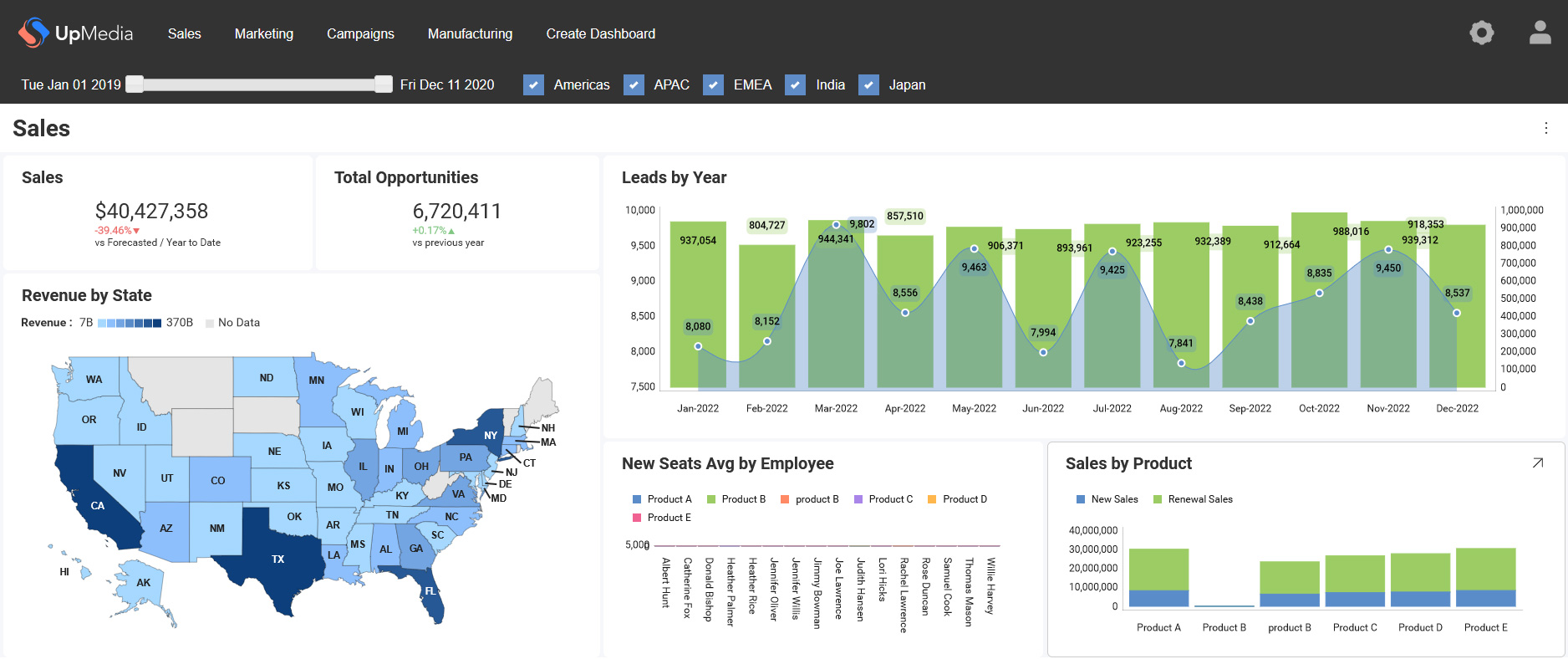
Organizations are embedding analytics directly into applications and workflows to support real-time decision-making, identify trends faster, and automate analysis. This shift reflects a broader recognition: insight has limited value if it is disconnected from action.

The survey also reveals a preference for vendor solutions over in-house development when embedding analytics. The reasons are pragmatic. Building and maintaining analytics internally requires time, specialized skills, and ongoing maintenance—resources that many teams cannot spare given current constraints.
For technology leaders, this highlights a strategic opportunity. By embedding analytics where work happens, organizations can reduce dependency on manual reporting, minimize context switching, and enable teams to act on insight without additional overhead. In an environment defined by talent scarcity and budget pressure, this leverage becomes a competitive advantage.
What This Means for CIOs and CTOs in 2026
The findings from the 2026 survey point to a clear set of implications for technology leadership:
- Optimize for execution capacity, not feature volume. The limiting factor in 2026 will be the ability to execute safely and sustainably. Prioritization matters more than breadth.
- Treat AI and analytics as platforms, not projects. These technologies underpin multiple initiatives and require architectural thinking, governance, and long-term planning.
- Reduce internal build burden wherever possible. Scarce talent should focus on differentiation, not on recreating foundational capabilities.
- Embed insight where decisions are made. Analytics delivers the most value when it accelerates action, not when it lives in isolated dashboards.
- Demand measurable impact from every initiative. Economic pressure is unlikely to ease in the near term. Clear outcomes and accountability will determine which programs endure.
Leaders who internalize these principles will be better positioned to navigate the constraints of 2026 while continuing to deliver value through technology.